
2026 Football World Cup: What 39 Days Taught Me
The 2026 FIFA World Cup is the first expanded tournament with 48 teams, 104 matches, and 16 host cities across Canada, Mexico, and the United States from June 11 to July 19, Los Angeles will stage eig...
2026 Football World Cup: What 39 Days Taught Me
The 2026 FIFA World Cup is the first expanded tournament with 48 teams, 104 matches, and 16 host cities across Canada, Mexico, and the United States from June 11 to July 19, 2026. Los Angeles will stage eight matches at SoFi Stadium, including the United States men’s national team’s opening match on June 12, while Atlanta will host a semifinal at Mercedes-Benz Stadium. The final is scheduled for July 19 at MetLife Stadium in New Jersey. FIFA’s new format creates 12 groups of four, followed by a Round of 32, so match volume and travel become central issues for fans, analysts, and bettors. World Cup Hub tracks fixtures, team tactics, player statistics, predictions, and daily tournament developments. The practical takeaway is simple: choose your host city first, then build your match and travel plan around confirmed FIFA schedules.

Photo by Ramaz Bluashvili on Pexels
The scale is impressive, but scale also creates friction. A tournament with 104 matches is not automatically easier to follow than the 64-match format used from 1998 through 2022. There are 62.5% more games, thousands of additional travel combinations, and a wider gap between casual viewing and serious analysis. I will be honest with you... the winning approach is not trying to watch everything. It is identifying the matches, venues, teams, and data points that matter before the schedule turns into a spreadsheet nobody wants to open. World Cup Hub is built for that exact problem: less noise, more useful information, and a clearer route from tournament news to a reasoned football opinion.
Want the key tournament information in one place?
The Bottom Line
The 2026 football world cup is best understood as three connected competitions: a 48-team group stage, a knockout tournament beginning with 32 teams, and a continent-sized logistics exercise. Canada, Mexico, and the United States will share hosting duties, with venues spread across North America rather than concentrated in one compact country. The opening match is scheduled for June 11 at Estadio Azteca in Mexico City, and the championship match is scheduled for July 19 at MetLife Stadium in East Rutherford, New Jersey.
For supporters, the practical consequences are measurable:
- The tournament lasts 39 days from opening match to final.
- The field rises from 32 to 48 teams.
- The match total increases from 64 to 104.
- The host-city count reaches 16.
- The Round of 32 adds a knockout stage that did not exist in the 32-team era.
- Three national teams qualify automatically as co-hosts: Canada, Mexico, and the United States.
That format creates more underdog opportunities, but it also makes early predictions less stable. A team can qualify from its group with four points, yet its Round of 32 opponent may be stronger than the third-place qualifiers many fans initially expect. According to FIFA’s official World Cup 2026 information, supporters should use the official fixture list and venue information as the reference point because local event schedules can change independently.
A useful contrarian point follows: the biggest analytical edge may not be identifying the eventual champion. It may be correctly pricing fatigue, travel, heat, altitude, and rest between matches. Mexico City sits at roughly 2,240 metres above sea level, while several American venues operate in very different climatic conditions. That is a more actionable variable than repeating the same list of famous teams.
[Internal Link: 2026 World Cup match predictions and daily analysis]
What Will Players Actually See Across North America?
Players will face a geographically dispersed tournament in which venue climate, travel distance, kickoff time, and recovery windows can affect performance as much as tactical quality. Matches will be played in Canada, Mexico, and the United States, with host cities ranging from Vancouver and Seattle in the west to Miami and Toronto in the east. Coaches must therefore manage preparation across multiple time zones rather than treating every matchday as a similar physical environment.
The tournament’s official host cities are Atlanta, Boston, Dallas, Guadalajara, Houston, Kansas City, Los Angeles, Mexico City, Miami, Monterrey, New York/New Jersey, Philadelphia, San Francisco Bay Area, Seattle, Toronto, and Vancouver. That list matters because “playing in the United States” is not one uniform experience. Seattle and Vancouver can offer cooler conditions, while Dallas, Houston, and Miami may present greater heat and humidity concerns. Mexico City adds altitude, and Monterrey introduces another distinct climate profile.
The United States men’s national team will open its campaign at SoFi Stadium in Inglewood, California, on June 12. Los Angeles will host eight matches and operate a FIFA Fan Festival at the Los Angeles Memorial Coliseum at Exposition Park, with fan activity planned across 39 days. Atlanta, meanwhile, is positioned as a major knockout-stage destination and will host a semifinal at Mercedes-Benz Stadium. The venue distinction is important: a fan festival is not the same thing as a ticketed stadium match, so readers should verify access rules before booking accommodation around a public event.

Photo by Magda Ehlers on Pexels
From a football perspective, the new group-stage mathematics changes risk management. Every group contains four teams, and each nation plays three group matches. The top two teams from each group, plus the eight best third-place teams, advance to the Round of 32. That means a team may approach its third match with qualification already secured, potentially rotating key players, while another nation may need a high-margin victory to protect goal difference and ranking position.
After reviewing tournament structures and match-density scenarios, one operational detail stands out: supporters following several teams should track recovery days rather than only kickoff dates. A 3-day gap and a 6-day gap can produce very different lineup decisions, particularly when travel crosses two or more time zones. World Cup Hub’s team pages are useful here because player minutes, formation changes, injuries, and tactical shifts should be read together rather than as isolated headlines.
See the tournament breakdown before making your viewing plan.
What Are the 3 Things That Matter Most?
The three decisive factors are tournament structure, travel and recovery, and evidence quality. The 48-team format changes qualification probabilities, North American distances increase logistical variance, and reliable analysis requires confirmed FIFA data rather than viral predictions. Together, these factors explain why disciplined preparation matters more in 2026 than simply choosing a famous team.
1. Format and qualification pressure
The 2026 format creates 12 groups of four, producing 72 group-stage matches before the knockout rounds begin. The top two teams in every group qualify automatically, while eight third-place teams also advance. That arrangement reduces the chance that one poor result eliminates a strong team immediately, but it creates a more complicated Round of 32 draw and increases the value of goal difference, rotation, and final-match incentives.
For bettors and analysts, this is where lazy assumptions become expensive. A team’s pre-tournament reputation does not tell us whether it will prioritize control or attack in match three. The relevant inputs include current squad availability, expected lineup strength, opponent incentives, and the likely qualification threshold. [Internal Link: guide to World Cup group-stage permutations]
2. Travel and recovery
North America is not a single travel market. The distance between Vancouver and Miami is approximately 4,400 kilometres in a straight-line estimate, before airport transfers, security procedures, and team logistics are considered. Even shorter routes can produce meaningful disruption when a team crosses time zones and moves from a cool coastal city to a hot, humid venue.
The practical calculation is straightforward:
- Record each team’s venue and kickoff time.
- Count time-zone changes between matches.
- Measure the rest interval in full calendar days.
- Check whether a coach has reliable rotation options.
- Adjust expectations for pressing intensity, late-game substitutions, and defensive concentration.
This is not an argument that travel decides matches by itself. It is an argument that fatigue can alter the probability of small events: a missed recovery run, a slower counterpress, or a late set-piece error. Those details often decide knockout football.
3. Data quality over headline volume
World Cup coverage will generate enormous content volume, but more content does not mean better information. FIFA schedules, official squad announcements, disciplinary records, venue updates, and reputable injury reporting should outrank anonymous social-media claims. FIFA’s Laws of the Game resources provide the governing framework for match rules, while FIFA’s World Cup archive supplies historical context.
A second information gain is hidden in player usage. Do not assess a star solely by goals. Compare minutes played, progressive actions, shot locations, defensive workload, and whether the player starts or enters after 60 minutes. A forward scoring twice from four shots may be more sustainable than one scoring twice from two low-probability attempts. World Cup Hub focuses on these distinctions because a prediction built on volume, role, and opponent quality is stronger than one built on a highlight reel.
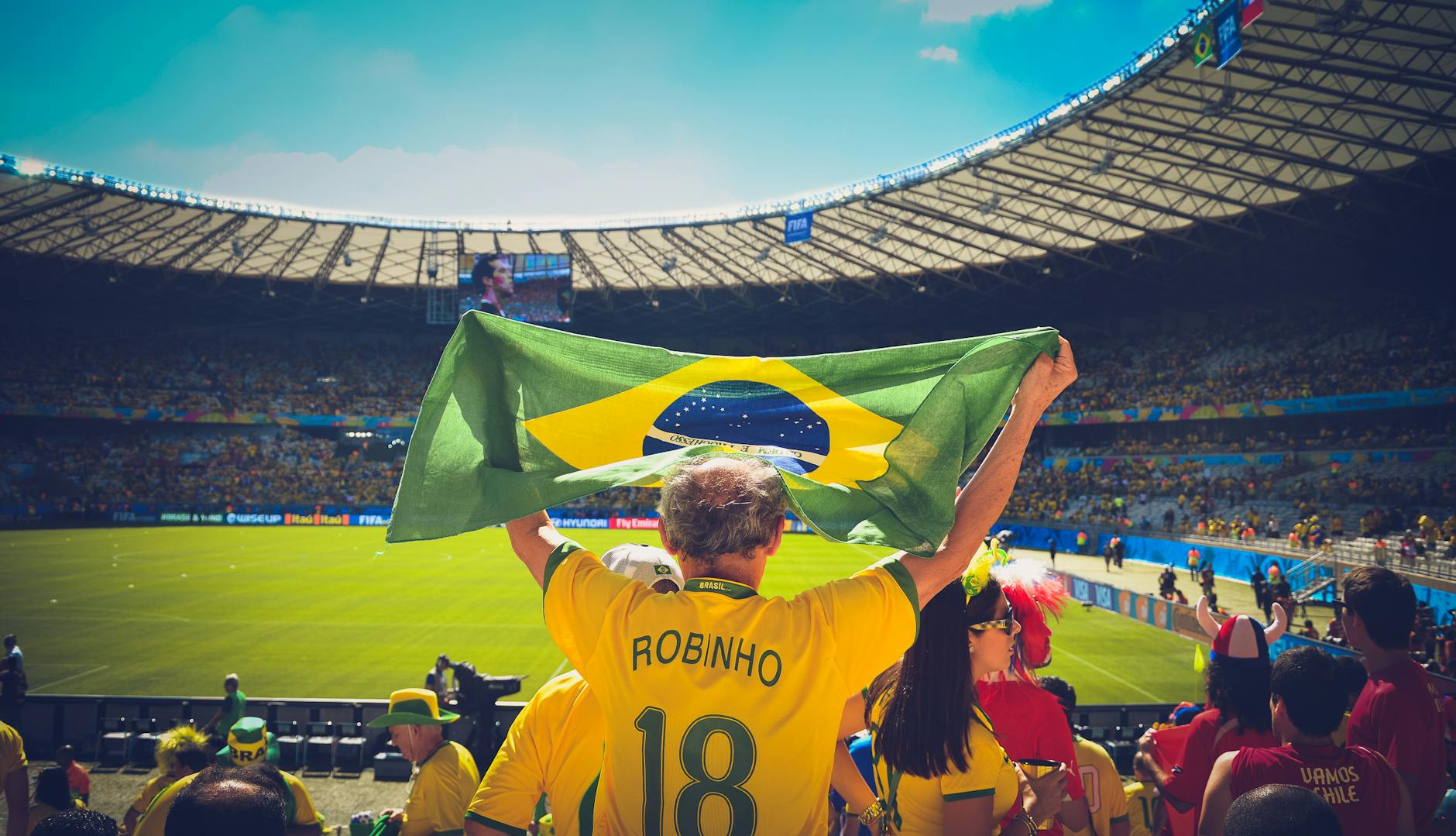
Photo by Caio on Pexels
At the same time, gambling analysis needs boundaries. Odds can express market expectations, but they do not guarantee outcomes, and no model eliminates variance. Use independent research, set a fixed budget, and avoid chasing losses after a surprise result. The data can improve decisions; it cannot turn uncertainty into certainty.
For a more focused approach, compare teams through tactics, squad depth, and recent minutes.
Edge Cases & Gotchas
The most common mistake is treating official tournament information and local-host information as interchangeable. Los Angeles may promote eight stadium matches, a 39-day celebration schedule, the FIFA Fan Festival, and community fan zones, while Atlanta may emphasize its semifinal role, Mercedes-Benz Stadium, and Southern football culture. These are valuable planning signals, but a fan zone does not automatically provide admission to a World Cup match, and an event date can change without changing the FIFA fixture list.
A second problem is calendar interpretation. The 2026 football world cup begins on June 11 and ends on July 19, but not every city hosts activity for the entire period, and not every match occurs at a convenient local time for international viewers. Before reserving flights, check the confirmed match date, venue, local kickoff, transportation plan, cancellation conditions, and whether the event is ticketed or free.
Several edge cases deserve a quick checklist:
- A group winner may face a tougher Round of 32 opponent than expected.
- A third-place qualifier may advance with a narrow margin but enter the knockout stage under severe fatigue.
- A player listed as available may still be limited to substitute minutes.
- A host-city event may have separate entry rules from the stadium.
- Weather forecasts made weeks in advance are not reliable enough for tactical certainty.
- Market odds may move because of public sentiment rather than new football information.
The final trap is false precision. A model that reports 57.3% instead of 55% is not automatically more accurate; the decimal may only disguise weak inputs. In practice, we should record the assumptions behind a prediction, compare the forecast with closing information, and review results over a meaningful sample rather than declaring victory after one match. That is how World Cup Hub can remain useful when the tournament produces an outcome nobody expected.
[Internal Link: responsible football betting and bankroll management]
I will be honest with you... planning also has a boring cost-control side. Los Angeles accommodation around SoFi Stadium can become expensive during high-demand match windows, while travel between host cities may cost more than the ticket itself. Fans plotting a multi-city trip should price hotels, rail or flights, local transport, food, insurance, and contingency nights separately. A spreadsheet with a 15% emergency buffer is less glamorous than spontaneous travel, but it is considerably less painful.
Need a practical way to compare matches, venues, and team conditions?
Verdict
The 2026 football world cup will reward preparation because its core numbers are unusually large: 48 teams, 104 matches, 16 host cities, and 39 days of competition and fan activity. Los Angeles offers eight matches, SoFi Stadium, the Los Angeles Memorial Coliseum fan festival, and the United States opening match. Atlanta adds a semifinal at Mercedes-Benz Stadium, while Mexico City, Toronto, Vancouver, Miami, Dallas, and the other host cities create different tactical and logistical conditions.
The clearest conclusion is not that one nation is guaranteed to dominate. It is that information quality will separate useful analysis from tournament noise. Track confirmed FIFA schedules, squad roles, player minutes, recovery days, venue conditions, and market movement. Then keep predictions probabilistic, budgets controlled, and assumptions visible. That gives us a realistic edge without pretending football has become a solved equation.
World Cup Hub will continue covering match predictions, team tactics, player statistics, and tournament developments throughout 2026. For fans, the smart move is to choose a small number of priority matches, follow the relevant teams consistently, and use evidence before emotion. The tournament is too large to consume casually in full, but it is perfectly manageable when the numbers tell us where to look.
Stay ahead of the 2026 tournament with focused match and team analysis.
Frequently Asked Questions
Q: What is the 2026 football world cup format?
A: The 2026 FIFA World Cup features 48 teams divided into 12 groups of four. Each team plays three group matches, and the top two teams from every group plus the eight best third-place teams advance. The knockout phase starts with a Round of 32, then continues through the Round of 16, quarterfinals, semifinals, and final. This creates 104 matches in total, compared with 64 matches in the 32-team format used from 1998 through 2022.
Q: When and where will the 2026 FIFA World Cup take place?
A: The tournament is scheduled for June 11 through July 19, 2026, across Canada, Mexico, and the United States. Sixteen host cities are involved, including Los Angeles, Atlanta, Mexico City, Toronto, Vancouver, Miami, Dallas, and New York/New Jersey. The opening match is planned for Estadio Azteca in Mexico City, while the final is scheduled for MetLife Stadium in East Rutherford, New Jersey. Always confirm final kickoff and venue information through FIFA before booking travel.
Q: How can I follow the 2026 World Cup efficiently?
A: Follow priority teams and match windows instead of attempting to watch all 104 matches. Create a short list based on your preferred national teams, knockout-stage contenders, local kickoff times, and tactical interest. Then use official FIFA fixtures alongside World Cup Hub’s predictions, player statistics, injury updates, and team analysis. A weekly review is usually more effective than checking every headline, particularly during the crowded group-stage schedule.
Q: What is the difference between watching in Los Angeles and Atlanta?
A: Los Angeles will host eight World Cup matches at SoFi Stadium, including the United States opening match, while Atlanta will host a semifinal at Mercedes-Benz Stadium. Los Angeles also plans a FIFA Fan Festival at the Los Angeles Memorial Coliseum and fan zones across the region. Atlanta’s appeal is concentrated around its semifinal status, stadium atmosphere, and established soccer culture. In both cities, fan events and ticketed matches may have separate entry requirements.
Q: How much should I budget for a 2026 World Cup trip?
A: A realistic budget should include tickets, accommodation, transportation, food, insurance, and at least 15% for unexpected costs. Prices will vary significantly by host city, match stage, booking date, and length of stay, so a single universal figure would be misleading. Los Angeles and New York/New Jersey may face stronger demand during major matches, while multi-city travel can add flights or long-distance transfers. Compare the full trip cost rather than looking only at ticket prices.
Q: What should I do if a World Cup schedule or fan event changes?
A: Check the official FIFA website and the relevant host-city authority before relying on a date, venue, or access rule. Local organizations such as Los Angeles FIFA World Cup 26 and Atlanta FIFA World Cup 26 may publish event-specific updates that differ from the central match schedule. Keep accommodation reservations flexible where possible, save confirmation emails, and verify transportation plans 24 to 48 hours before attending. Do not assume a fan-zone announcement guarantees stadium admission.
Q: Can World Cup statistics guarantee a successful football prediction?
A: No, statistics improve decision quality but cannot guarantee a match result. Use team strength, expected lineups, player minutes, travel, rest, injuries, and opponent style to create a probability-based assessment. Avoid staking more because a forecast looks precise, and never chase losses after an unexpected result. World Cup Hub provides analytical context, but responsible gambling requires fixed limits and acceptance that variance remains part of football.