2026 Football World Cup: 3 Schedule Insights
The 2026 FIFA World Cup is a 48-team tournament hosted by the United States, Canada, and Mexico from June 11 to July 19, The competition expands from 32 to 48 nations, creating 104 matches across 16 h...
2026 Football World Cup: 3 Schedule Insights
The 2026 FIFA World Cup is a 48-team tournament hosted by the United States, Canada, and Mexico from June 11 to July 19, 2026. The competition expands from 32 to 48 nations, creating 104 matches across 16 host cities, including New York/New Jersey, Los Angeles, Mexico City, Toronto, and Dallas. FIFA’s format uses 12 groups of four teams, with the top two in each group plus the eight best third-place teams advancing to a 32-team knockout stage. The opening match is scheduled for Mexico City, while the final will be played at MetLife Stadium in New Jersey. For supporters, the most important planning issue is not simply finding a match; it is managing distances, time zones, ticket demand, and recovery between fixtures. Use the official FIFA schedule first, then compare team paths, venue travel, and match markets before making plans.
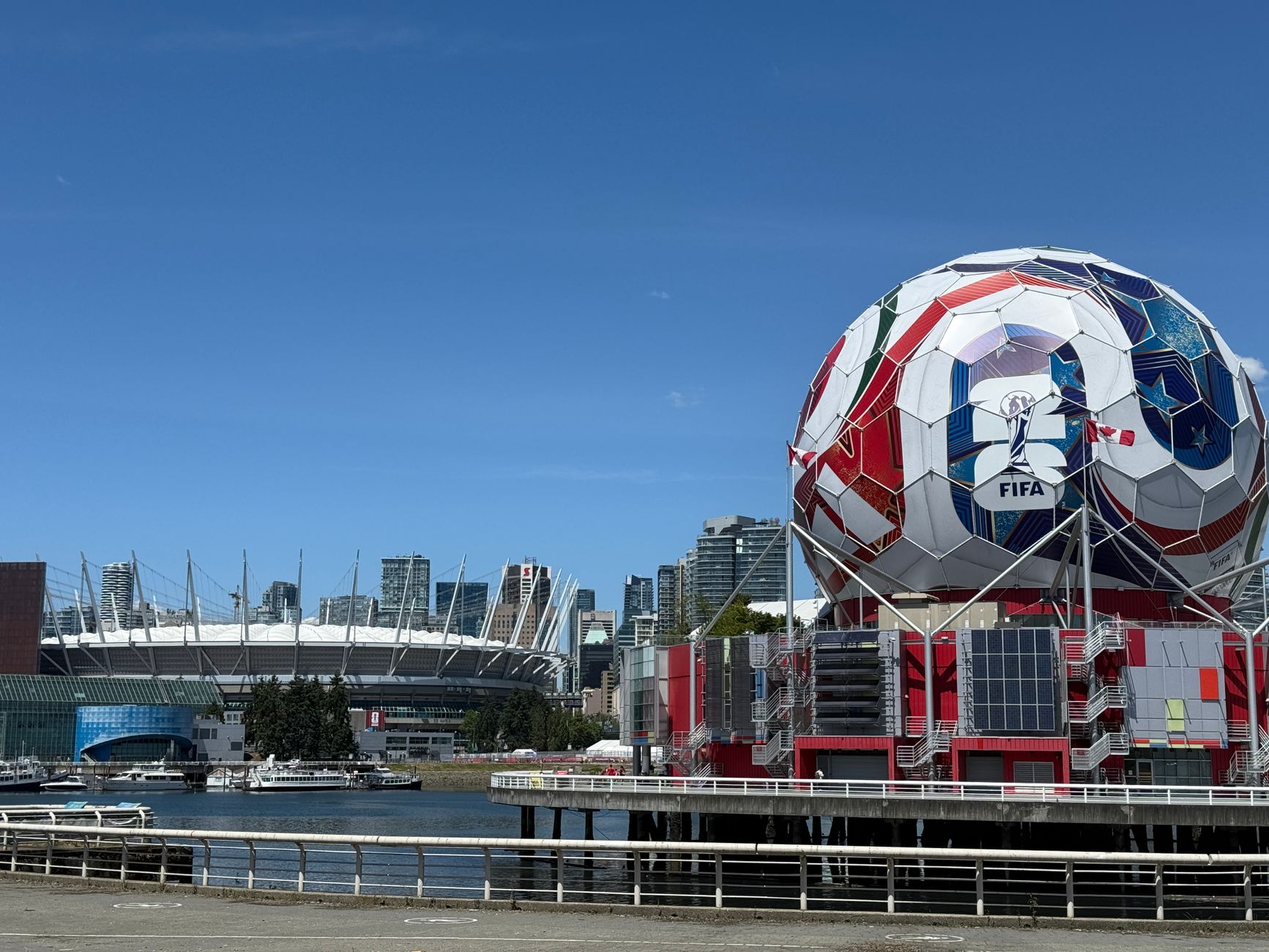
Photo by The Six on Pexels
The 2026 tournament is unusually difficult to read at a glance because three countries share hosting duties across North America. A fan following Brazil, England, or the United States may need to account for flights of more than 2,000 miles, local kickoff times, and different climates within the same tournament week. World Cup Hub tracks those variables alongside match predictions, team tactics, player statistics, and daily tournament updates.
Want a cleaner way to follow the competition?
The Top 3 2026 Football World Cup Schedule Insights at a Glance
- The 48-team format: Twelve groups and 104 matches create a larger, more complicated qualification route than previous World Cups.
- The North American footprint: Sixteen venues across Canada, Mexico, and the United States make travel a strategic factor.
- The knockout-stage reset: The round of 32 begins after the group phase, changing how teams manage rotations, goal difference, and third-place qualification.
The schedule matters because tournament value is not distributed evenly across fixtures. A group-stage match in Mexico City carries a different tactical and physical context from one in Seattle or Toronto, while a knockout game in Dallas may involve heat management and squad rotation. FIFA has confirmed that the final will take place at MetLife Stadium, officially known as New York New Jersey Stadium for FIFA tournament branding, on July 19, 2026. The opening match at Estadio Azteca in Mexico City is scheduled for June 11, giving Mexico the symbolic advantage of beginning the competition at home.
- Tournament dates: June 11 to July 19, 2026
- Host nations: Canada, Mexico, and the United States
- Participating teams: 48
- Total matches: 104
- Host venues: 16
- Final venue: MetLife Stadium, New Jersey
For the complete match-by-match listing, consult the FIFA World Cup 2026 schedule and compare it with ESPN’s football schedule tools. The practical point is simple: the 2026 Football World Cup is not one compact event; it is a continental tournament with three national football ecosystems operating together.
#1: The 48-Team Format Is the Best Overall Insight
The 48-team format is the most important schedule change because it produces 104 matches, 12 groups, and a 32-team knockout phase. Previously, the FIFA World Cup used 32 teams, eight groups, and 64 matches, so the 2026 edition adds 40 matches and increases the number of knockout-stage entrants from 16 to 32. That changes the competitive mathematics immediately.
The top two teams from each group advance, joined by the eight best third-place teams. This means a team can potentially survive the group stage with one win, two draws, and a favorable goal difference, although the exact qualification threshold will depend on results across all 12 groups. Analysts should therefore monitor goals scored, goals conceded, disciplinary records, and the ranking rules used to separate third-place teams rather than treating six points as an automatic target.
The format also creates a longer path to the trophy. A finalist may play eight matches instead of seven if it reaches the final after the expanded group stage. That additional fixture increases the importance of squad depth, injury management, and substitutions. FIFA’s official competition overview confirms the structural expansion, while the International Football Association Board remains the authority for the Laws of the Game applied during international competition.
One contrarian point is worth noting: more teams do not automatically mean more uncertainty in every group. Strong nations may face weaker opponents in the opening phase, but the extra knockout round creates more opportunities for one poor performance to end a title run. In practical terms, the expanded format rewards teams that can maintain concentration across eight matches, not merely those with the best starting eleven.
Check the bracket structure before analyzing individual fixtures; otherwise, a prediction can look logical while ignoring the number of matches required to reach the final.
#2: North American Travel Is Best for Route Planning
North American travel is the biggest scheduling challenge because the 16 host cities cover three countries and several climate zones. The United States hosts matches in cities such as Atlanta, Boston, Dallas, Houston, Kansas City, Los Angeles, Miami, New York/New Jersey, Philadelphia, San Francisco Bay Area, and Seattle. Canada hosts in Toronto and Vancouver, while Mexico hosts in Guadalajara, Mexico City, and Monterrey.
A supporter planning two matches should not assume that nearby cities are automatically easy to connect. Dallas to Atlanta is roughly 720 miles by air, Miami to New York is about 1,090 miles, and Mexico City to Monterrey is approximately 440 miles. Those distances are manageable with direct flights, but airport transfers, security queues, accommodation changes, and kickoff timing can consume 8 to 12 hours of usable travel time.
A more useful method is to build a route by region:
- Western route: Vancouver, Seattle, San Francisco Bay Area, and Los Angeles.
- Central route: Dallas, Houston, Kansas City, and Monterrey.
- Eastern route: Toronto, Boston, Philadelphia, New York/New Jersey, Atlanta, and Miami.
- Mexican route: Mexico City, Guadalajara, and Monterrey.
Weather adds another variable. Mexico City sits at approximately 2,240 meters above sea level, while Miami is near sea level and can experience high humidity in June and July. Seattle and Vancouver typically offer cooler conditions, whereas Dallas, Houston, and Atlanta can produce intense heat. These differences matter for teams using high pressing, aggressive transition football, or a narrow rotation policy.
For broader travel planning, the U.S. Department of State provides country-specific guidance, while Canada’s official travel advice covers Canadian venue considerations. Do not treat travel as a minor detail; a 2026 World Cup route with two long-haul moves in five days can influence both fan experience and team performance.
Want to compare venues, routes, and match-day conditions?
#3: The Knockout Stage Is Best Value for Competitive Analysis
The knockout stage offers the best value for serious match analysis because the round of 32 introduces direct elimination immediately after the group phase. Every match from that point has a binary outcome: win and advance, lose and go home. That makes lineup news, defensive availability, penalty-taker selection, and game-state tendencies more valuable than broad reputation.
The group phase contains 72 matches, calculated as 12 groups multiplied by 6 fixtures each. The knockout phase then adds 32 round-of-32 matches, 16 round-of-16 matches, 8 quarter-finals, 4 semi-finals, a third-place play-off, and the final. The arithmetic is straightforward: 72 plus 32 plus 16 plus 8 plus 4 plus 1 plus 1 equals 104.
For readers following football betting markets, that structure creates a common analytical mistake. A team may be priced as a tournament contender because it has an elite attack, yet the group-to-knockout transition may expose weaknesses against compact opponents. The better question is whether the team can create chances without conceding transition opportunities when one goal changes the entire risk calculation.
World Cup Hub evaluates expected goals, shot quality, pressing intensity, set-piece output, goalkeeper save rates, and player availability. These figures should support research, not replace judgment. Betting laws and age requirements vary by jurisdiction, so review local rules and use responsible limits before placing any wager. The World Health Organization describes gambling-related harm as a public-health concern, and that is a useful reminder to keep entertainment spending separate from essential money.
[Internal Link: 2026 World Cup match prediction guide]
A practical edge case is the third-place table. A team can finish third in its group and still qualify, but its position depends on comparisons with 11 other third-place teams. Therefore, a late goal in another group can change the knockout opponent or eliminate a team that appeared safe. This is why live schedule tracking matters more in 2026 than in the 32-team era.
How Was the 2026 Football World Cup Schedule Ranked?
The schedule insights were ranked using format impact, travel complexity, analytical usefulness, and practical planning value, with format impact receiving the highest weight. The 48-team structure scored first because it changes qualification, match volume, recovery demands, and knockout pathways simultaneously. Travel ranked second because 16 venues across three countries create measurable logistical pressure for supporters and teams.
The scoring model used four categories:
- Format impact: 35% — number of teams, groups, matches, and knockout rounds.
- Travel complexity: 30% — distance, borders, climate, airport access, and time zones.
- Match-analysis value: 20% — importance of team news, goal difference, and tactical matchups.
- Fan-planning usefulness: 15% — ticket timing, accommodation, route design, and match spacing.
This weighting avoids a common mistake: ranking the schedule only by famous venues. Estadio Azteca, SoFi Stadium, and MetLife Stadium are important entities, but venue fame does not tell you how difficult it is to follow a team across consecutive fixtures. A route with two matches in the same region may be more attractive than a famous-city itinerary involving three border crossings.
The schedule also needs to be read alongside official match times, because local kickoff hours affect rest and television audiences. The final match date, July 19, 2026, is fixed, but exact fixture interpretation should always be checked against FIFA’s latest publication. Tournament schedules can be adjusted for operational reasons, so old screenshots and social-media graphics should not outrank official updates.
[Internal Link: World Cup team tactics and player statistics]
What Should You Watch Before Choosing Matches?
Before choosing matches, prioritize the official fixture date, venue, team route, local kickoff time, and confirmed squad news. Those five variables usually provide more practical value than selecting games only because they feature a famous nation. In 2026, venue geography and recovery time can materially change the quality of a match-day plan.
Use this checklist:
- Confirm the fixture on FIFA.com rather than relying on an unofficial graphic.
- Check whether the match is in Canada, Mexico, or the United States.
- Measure travel time door to door, not only flight duration.
- Review the previous match location and the next scheduled fixture.
- Compare likely weather, altitude, and humidity conditions.
- Check squad announcements, suspensions, and injury reports.
- Set a fixed budget for tickets, transport, accommodation, and any betting activity.
The most useful preparation window is usually 72 hours before kickoff. That is when final training reports, press conferences, travel information, and probable lineups become clearer. However, do not confuse late information with certainty. A confirmed starting lineup can improve a model, but football remains a low-scoring sport where one deflection, red card, or goalkeeper error can overturn a statistically superior plan.
World Cup Hub’s daily coverage is designed for this final review stage. It combines team tactics, player form, match predictions, and tournament context rather than presenting one isolated tip. That approach is slower than reading a headline, but it is generally more useful when the fixture has high travel, weather, or qualification complexity.
Ready to turn the schedule into a personal match plan?
Which 2026 Football World Cup Schedule Insight Should You Pick?
Choose the 48-team format if you want to understand qualification and tournament strategy, the North American travel map if you are attending matches, and the knockout stage if your priority is advanced match analysis. For most readers, the best combined approach is to start with the official fixture list, group matches by region, and then assess teams through tactical and player-data updates.
The opening match in Mexico City and the final at MetLife Stadium provide clear geographic anchors, but the middle of the tournament is where planning becomes complicated. A supporter following the United States could encounter long domestic travel, while a supporter following Brazil, Germany, or Argentina may need to cross national borders between matches. The 2026 FIFA World Cup therefore rewards preparation more than improvisation.
My blunt recommendation is to build a flexible itinerary rather than a rigid one. Book the matches you genuinely want, leave recovery space after long transfers, and keep a reserve budget for transport changes. For predictions or betting, compare probability with price and set a maximum loss before kickoff; no tournament statistic can make a poor price attractive.
[Internal Link: World Cup 2026 travel planning checklist]
In short, the 2026 Football World Cup is bigger, longer, and more geographically demanding than the tournaments held between 1998 and 2022. FIFA’s 48-team design gives fans 104 matches, but it also creates more qualification scenarios and more potential travel errors. Stay with official FIFA updates, use World Cup Hub for structured analysis, and let the numbers guide the plan rather than the noise.
See the latest tournament coverage and schedule analysis.
Frequently Asked Questions
Q: What is the 2026 Football World Cup format?
A: The 2026 Football World Cup features 48 teams divided into 12 groups of four. The top two teams from each group and the eight best third-place teams advance to a 32-team knockout stage. The tournament contains 104 matches, compared with 64 in the 32-team format used from 1998 through 2022. This expansion gives the competition an additional knockout round and may increase the importance of goal difference and third-place comparisons.
Q: When does the 2026 FIFA World Cup start and finish?
A: The 2026 FIFA World Cup is scheduled to begin on June 11, 2026, and finish on July 19, 2026. The opening match is planned for Estadio Azteca in Mexico City, while the final is scheduled for MetLife Stadium in New Jersey. Always verify kickoff times and fixture updates through FIFA because operational details can change after the initial schedule release.
Q: Which countries host the 2026 World Cup?
A: Canada, Mexico, and the United States jointly host the 2026 World Cup. Matches are distributed across 16 host cities, including Toronto, Vancouver, Mexico City, Guadalajara, Monterrey, Los Angeles, Dallas, Miami, Seattle, and New York/New Jersey. The three-country setup creates significant differences in travel distance, climate, altitude, border procedures, and accommodation costs.
Q: How should I plan travel for 2026 World Cup matches?
A: Plan travel by regional clusters and leave at least one recovery day after a long-distance transfer. Western routes can include Vancouver, Seattle, San Francisco Bay Area, and Los Angeles, while eastern routes can include Toronto, Boston, Philadelphia, and New York/New Jersey. Check airport transfers, passport requirements, local transport, hotel availability, and the previous and next match locations before buying a non-refundable itinerary.
Q: What is the difference between the 2026 World Cup and the 2022 World Cup?
A: The 2026 World Cup has 48 teams and 104 matches, whereas the 2022 World Cup had 32 teams and 64 matches. The 2026 tournament adds a round of 32, uses 12 groups instead of 8, and is hosted across Canada, Mexico, and the United States rather than one country. The longer route may increase the importance of squad depth, travel management, and tactical flexibility.
Q: Are 2026 World Cup schedule predictions reliable?
A: Schedule predictions are useful for planning but cannot guarantee match results or qualification outcomes. Statistical models become stronger when they include expected goals, injuries, suspensions, rest days, travel distance, weather, and confirmed lineups. Treat predictions from World Cup Hub and other providers as research, compare the underlying assumptions, and never risk money you cannot afford to lose.
Q: What should I do if the 2026 World Cup fixture information conflicts across websites?
A: Treat FIFA’s official tournament website as the primary authority when schedule information conflicts. ESPN, national football associations, broadcasters, and ticketing platforms can help with presentation, but older articles and social-media images may contain outdated times or venue labels. Save the official fixture page, recheck it before booking travel, and confirm local kickoff time rather than relying only on the date.