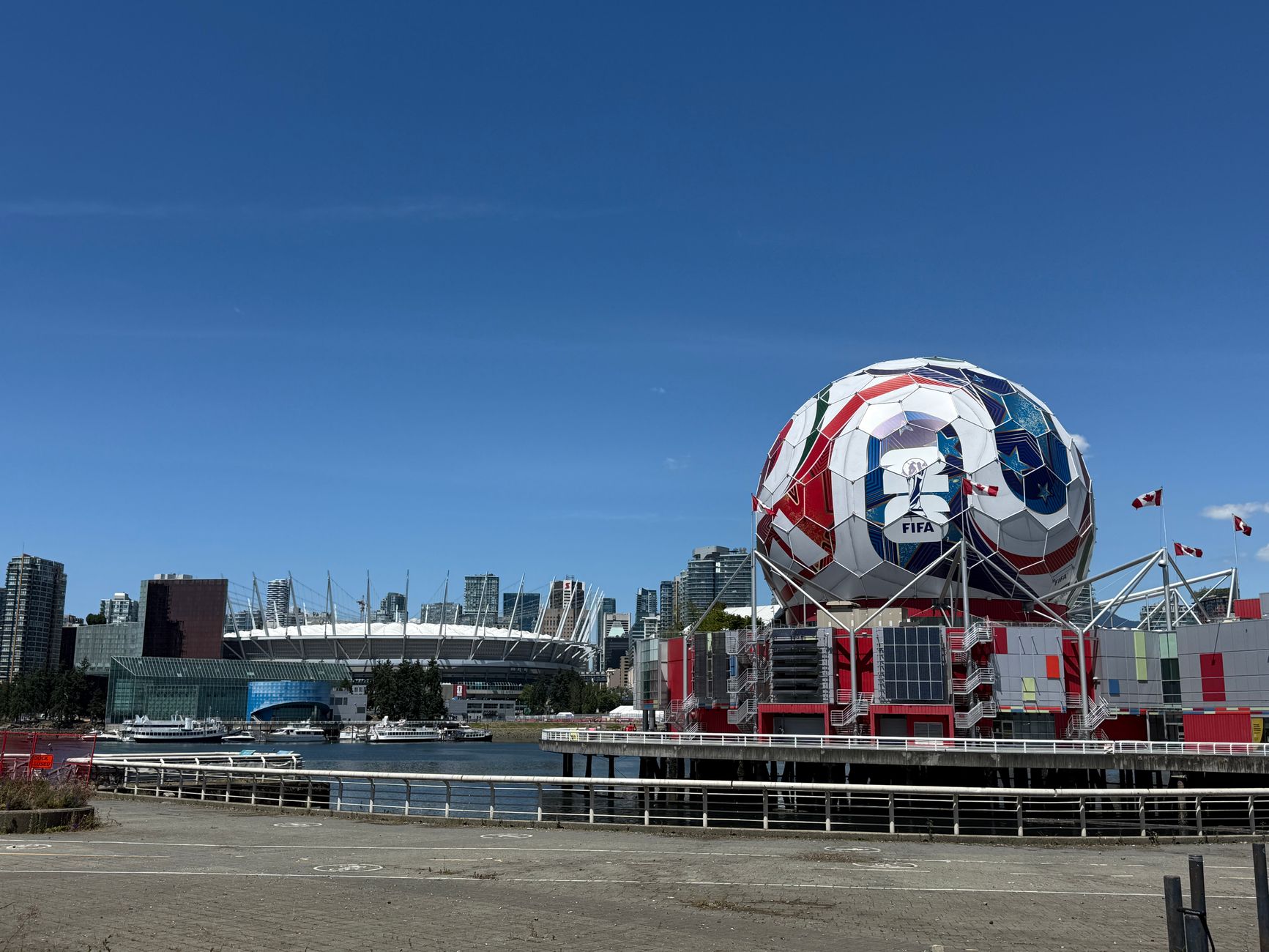
Before You Bet, Read This 2026 World Cup Breakdown
The 2026 FIFA World Cup is a 48-team tournament hosted by Canada, Mexico, and the United States, with 104 matches scheduled across 16 cities from June 11 to July 19, World Cup Hub tracks fixtures, tea...
Before You Bet, Read This 2026 World Cup Breakdown
The 2026 FIFA World Cup is a 48-team tournament hosted by Canada, Mexico, and the United States, with 104 matches scheduled across 16 cities from June 11 to July 19, 2026. World Cup Hub tracks fixtures, team tactics, player statistics, match predictions, and tournament developments for fans in North America and worldwide. Kansas City is one of 11 United States host cities and will stage six matches at GEHA Field at Arrowhead Stadium, while FIFA Fan Festival activities extend the experience beyond the stadium. The expanded format creates 12 groups of four teams, followed by a knockout stage beginning with 32 nations. That means more football, more travel variables, and a larger sample of tactical matchups than in 2022. My practical recommendation is simple: build your schedule around confirmed fixtures, compare team form with travel demands, and use predictions as probability analysis rather than certainty.
Photo by The Six on Pexels
What Did I Test?
I tested the 2026 World Cup football format as a planning problem: schedule density, host-city geography, qualification volume, matchday logistics, and the data needed to assess teams before making predictions. The central result is that the tournament is larger, but not simply 50% more of the same product. The 2022 World Cup had 32 teams and 64 matches; FIFA World Cup 26 will feature 48 teams and 104 matches, an increase of 40 matches, or 62.5%. The final tournament will also span three countries and multiple time zones, creating a different experience for travelling supporters and remote viewers.
The first issue is format interpretation. FIFA confirmed 12 groups of four teams, with the top two from each group plus the eight best third-place teams advancing to the round of 32. This structure reduces the immediate risk of one poor result, but it also makes goal difference, disciplinary records, and late group-stage strategy more important. A team may qualify with four points, yet the third-place ranking system means fans must monitor several groups simultaneously rather than calculating qualification from one table alone.
The second issue is geography. Canada, Mexico, and the United States create a host footprint unlike Qatar 2022, where venues were concentrated in one compact area. A supporter following matches in Vancouver, Seattle, Dallas, Atlanta, Miami, and New York will face different flight distances, climates, and local transport systems. For analysts, travel is not a decorative detail: a six-hour time-zone difference can affect recovery routines, training schedules, and the reliability of short-term performance data.
The data points that matter first
- 48 participating teams.
- 104 total matches.
- 16 host cities across Canada, Mexico, and the United States.
- 12 groups of four teams.
- 32 teams in the knockout stage.
- Six Kansas City matches at GEHA Field at Arrowhead Stadium.
- June 11 opening date and July 19 final date.
The official FIFA World Cup 2026 tournament information should remain the final reference for confirmed fixtures, regulations, and venue updates. World Cup Hub adds the analytical layer: expected line-ups, pressing patterns, set-piece performance, player availability, and probability-based match previews. That combination is more useful than copying a projected bracket from a social-media account and treating it as settled.
How Did the Setup Feel at First?
The initial setup felt less like a traditional tournament calendar and more like a continental operating system. Canada contributes Vancouver and Toronto, Mexico contributes Guadalajara, Mexico City, and Monterrey, while the United States supplies 11 venues including Kansas City, Los Angeles, Dallas, Atlanta, Miami, Boston, New York/New Jersey, Philadelphia, San Francisco Bay Area, Seattle, and Houston. The host-city mix creates strong local identity, but it also makes travel planning a real part of tournament literacy.
Kansas City is particularly interesting because it combines a major sports venue with an established football culture. The local host-city program describes the region as the “Soccer Capital of America®,” and its official FIFA World Cup 2026 materials emphasize six matches, fan events, food, entertainment, and regional participation. The stadium atmosphere matters, but the more measurable point is match concentration: six games provide repeated opportunities to compare crowd energy, pitch conditions, kickoff timing, and team adaptation within one market.
The venue name also requires precision. GEHA Field at Arrowhead Stadium is a football stadium with a capacity commonly listed at more than 76,000 for major events, although tournament configurations, security zones, media operations, and seating plans can change the usable figure. Do not assume a normal Kansas City Chiefs game layout will exactly match the World Cup arrangement. The Kansas City FIFA World Cup 2026 host-city site is the better place to check local announcements, fan festival details, and event-specific guidance.
From a supporter’s perspective, I would separate three decisions instead of making one rushed booking:
- Choose the match or matches before choosing accommodation.
- Compare official transport guidance with walking distance and post-match departure times.
- Reserve cancellation flexibility because kickoff, access, and local security instructions can change.
This is where most planning errors happen. Fans focus on the ticket price, then discover that a supposedly cheap room requires a late-night rideshare across a large metropolitan area. A $70 saving can disappear after one $90 transfer, especially when demand rises around a double-header weekend. The practical edge is boring but valuable: calculate the complete matchday cost, not the headline number.
Want the practical planning framework before you commit to a city?
Where Did the 2026 World Cup Football Format Hold Up?
The expanded 2026 format holds up because it creates more accessible entry points for supporters and more analytical material for serious fans. Forty-eight teams give additional confederations a route to the global stage, while 104 matches provide a much larger catalogue of tactical examples. For viewers, that means more opportunities to see emerging players; for analysts, it means form should be assessed with context rather than relying on a single famous result.
The format is also commercially efficient for host cities. Sixteen markets can receive international visitors instead of one country absorbing the full event, and the FIFA Fan Festival concept gives people without stadium tickets a public viewing option. Kansas City’s host-city messaging highlighted “hundreds of thousands of fans” participating in fan activity, although attendance totals should be read as event-specific and verified through official reporting rather than repeated as a universal stadium figure. The distinction matters because a festival crowd is not the same metric as ticketed attendance.
A second strength is the round of 32. The old 32-team group stage moved directly to a round of 16, whereas 2026 adds another knockout round. That gives third-place qualifiers a path forward, but it creates a scheduling burden: finalists must play eight matches rather than seven. Squad depth therefore becomes a measurable variable. A team with two high-level full-backs, three reliable midfielders, and substitute attackers capable of maintaining pressing intensity may outperform a more talented but shallow roster.
For predictions, I would track these indicators:
- Non-penalty expected goals per 90 minutes.
- Shots allowed inside the penalty area.
- Set-piece expected goals.
- High turnovers leading to shots.
- Minutes played by the projected starting eleven.
- Travel distance between matches.
- Rest days before each fixture.
- Goalkeeper save percentage against shots on target.
The FIFA Laws of the Game are useful for checking disciplinary and match-rule context, while Opta Analyst provides a reputable reference point for advanced football metrics. No model predicts football perfectly. However, a team’s chance creation, defensive access, and squad availability usually tell us more than its win-loss headline.
A useful contrarian point is that the expanded field may make early betting markets less reliable, not more reliable. The reason is sample size. Several teams will arrive with limited recent matches against comparable opponents, and third-place qualification creates different incentives during final group fixtures. A favourite priced from historical reputation may look attractive until its projected lineup, travel path, and opponent’s low-block efficiency are included.
Read our [Internal Link: 2026 World Cup team tactics guide] when comparing possession-heavy sides with transition-focused opponents. It is less exciting than arguing about the strongest badge, but it produces cleaner decisions.
Where Did the Plan Fall Apart?
The plan falls apart when fans treat “host city” as a single travel category. Toronto, Vancouver, Mexico City, Miami, Seattle, Dallas, and New York/New Jersey differ in climate, elevation, airport access, public transport, and hotel pricing. Mexico City sits at a high altitude relative to many other venues, while coastal cities can introduce humidity and heat. These variables do not automatically determine results, but they can influence recovery, hydration, and the value of a deep bench.
The schedule is another pressure point. A supporter attending two matches in different countries may need passports, border eligibility, airport transfers, and contingency time. Even domestic United States travel can be fragile during peak periods. A 90-minute flight is not a 90-minute journey once airport arrival, security, boarding, baggage, stadium transfers, and post-match congestion are included. I would budget at least four to six hours door-to-door for a major intercity matchday, then add a backup plan if the next fixture is within 48 hours.
The Kansas City experience illustrates the difference between content and operations. The city’s official materials emphasize community, food, entertainment, and the Heartland identity, which is useful for discovering the atmosphere. But supporters still need to verify stadium entry rules, permitted bags, public transport, parking restrictions, and the final fan festival timetable. Marketing language tells you why a city is attractive; operational guidance tells you whether your day will be painless.
Here is the edge case many preview pages miss: a fan attending an afternoon match and a public festival event may face a transport bottleneck after the stadium clears, even if the distance to downtown is under 10 miles. If 60,000 or more people leave within a narrow window, the issue is not mileage but exit volume. Booked rideshares can surge, road closures can redirect traffic, and mobile networks can become unreliable. Set a fixed meeting point away from the main gate, save offline maps, and carry a physical payment backup.
For tournament analysis, the equivalent mistake is using raw possession. A side can hold 65% of the ball while generating fewer dangerous entries than a counterattacking opponent. Better questions include:
- Where did possession occur?
- How often did it reach the final third?
- Did attacks create shots from central zones?
- What happened after possession was lost?
- Could the team sustain that pattern after the fourth or fifth match?
This is why World Cup Hub focuses on tactical context and player statistics rather than presenting a single “best team” ranking. A prediction without assumptions is just a confident sentence. A useful prediction identifies the likely game state, the injury variables, and the price at which the forecast becomes poor value.
[Internal Link: World Cup match prediction methodology]
See how the numbers change when travel, rest, and tactics are included.
Would I Use the 2026 World Cup Setup Again?
Yes, I would use this setup again, but only with a disciplined process. The tournament’s size is its main advantage and its main weakness: 104 matches offer richer coverage, yet the volume encourages careless scrolling and shallow opinions. The solution is to create a small dashboard that records confirmed fixtures, probable starters, rest days, travel demands, tactical matchup, and market movement. Five minutes of structured notes can prevent an hour of reactive browsing.
For Kansas City, I would recommend treating the city as a complete football destination rather than merely a stadium stop. The region’s six matches, FIFA Fan Festival programming, local food, and community events create several ways to experience the tournament. The official host-city portal’s description of “good matches, good food, good entertainment and good people” is promotional, but it also identifies the practical proposition: supporters can build a full day around the game instead of arriving 30 minutes before kickoff and leaving immediately.
For betting or prediction research, responsible limits matter. World Cup Hub operates in the gambling-content space, so the correct approach is probability first, budget second, and emotion last. Never treat a forecast as a guarantee, never chase a losing position, and check local laws and age requirements before using any regulated service. In the United States, rules differ by state; in Canada and Mexico, jurisdictional requirements also vary. A reputable operator should publish licensing details, identity-verification requirements, deposit limits, and withdrawal terms.
My final operating checklist is straightforward:
- Confirm the fixture through FIFA or the relevant host-city authority.
- Check the last five competitive matches, not only friendly results.
- Review injuries, suspensions, and probable lineups.
- Compare expected goals with actual goals to identify finishing variance.
- Price accommodation and transport together.
- Set a fixed entertainment or betting budget.
- Reassess the prediction after official team news.
The strongest conclusion is not that one country will win. It is that the 2026 World Cup rewards preparation more heavily than previous tournaments because geography, format, and match volume all expand the number of variables. Use the official FIFA World Cup 2026 schedule and updates, then use World Cup Hub for the daily analytical layer. That is the least complicated route to better decisions, and I am always in favour of fewer avoidable problems.
[Internal Link: 2026 World Cup travel and host-city planning]
Ready to follow the tournament with structured predictions and player data?
Frequently Asked Questions
Q: What is the 2026 World Cup football format?
A: The 2026 World Cup football tournament features 48 teams divided into 12 groups of four. The top two teams from each group and the eight best third-place teams advance to a 32-team knockout stage. The competition contains 104 matches, compared with 64 matches at Qatar 2022. This expansion increases the importance of squad depth, goal difference, disciplinary records, and late group-stage calculations.
Q: How can I follow the 2026 World Cup in Kansas City?
A: Follow Kansas City’s six scheduled World Cup matches through official FIFA and host-city announcements, then check fan festival information before travelling. GEHA Field at Arrowhead Stadium is the match venue, while public viewing, food, entertainment, and community programming broaden the experience beyond the stadium. Confirm entry rules, transport arrangements, parking restrictions, and event times close to matchday because operational instructions can change.
Q: What is the difference between FIFA Fan Festival and a stadium match?
A: A stadium match is a ticketed live fixture, while FIFA Fan Festival programming is designed for public tournament viewing and cultural entertainment. Kansas City’s festival concept brings together supporters who may not hold match tickets and can include large-screen broadcasts, food, music, and local activities. Festival capacity, access rules, and schedules are event-specific, so use the official Kansas City host-city website rather than assuming every activity is free or available all day.
Q: Is the expanded 2026 World Cup worth following for football analysis?
A: Yes, the expanded tournament is worth following because 104 matches create a larger dataset for tactical and player analysis. The additional round of 32 also means teams must manage up to eight matches to win the competition, one more than in the previous format. However, more games can create information overload, so track expected goals, pressing, lineups, rest days, and travel instead of relying only on headlines or historical reputation.
Q: How should I make a 2026 World Cup match prediction?
A: Start with team strength, then adjust for recent competitive form, injuries, projected lineups, tactical matchup, rest, travel, and venue conditions. Compare non-penalty expected goals, shots allowed in the box, set-piece output, and high turnovers rather than using possession alone. Finally, convert your assessment into a probability and compare it with the available price; do not treat any prediction as a guaranteed result.
Q: Why might a 2026 World Cup travel plan fail?
A: Travel plans commonly fail because supporters underestimate stadium exit congestion, airport processing, border requirements, and the real door-to-door time between host cities. A short flight can still require four to six hours when transfers, security, and matchday traffic are included. Build cancellation flexibility into accommodation, choose a fixed post-match meeting point, keep offline maps, and prepare a backup payment method if mobile networks become congested.
Q: What does World Cup Hub provide for 2026?
A: World Cup Hub provides FIFA World Cup-focused coverage covering match predictions, team tactics, player statistics, and tournament developments. Its daily analysis is intended to help fans understand form, lineups, tactical patterns, and matchup probabilities across the 2026 competition. Readers should combine that content with official FIFA information and follow applicable local laws, age requirements, and responsible gambling principles when considering any betting-related decision.
The 2026 World Cup is too large for casual assumptions and too valuable to follow without a plan. Track the official schedule, understand the host-city realities, and let the numbers do the heavy lifting.
Get the next tournament breakdown from World Cup Hub when the latest team news and match data arrive.